


From Freebies to Fits: How Merchandise Became Fashion
There was a time when branded merchandise had a very specific reputation.
You know the type, a free pen forgotten in a desk drawer or a T-shirt destined to become “painting clothes.”
But merch has had a serious glow-up.
Somewhere between streetwear culture, social media, and the fact everyone now owns at least four “just for shopping” bags, branded merchandise became… fashionable.
Fashion Isn’t Just Runways and Designer Labels
When people hear the word “fashion,” they usually picture catwalks, luxury handbags, and sunglasses that cost more than a monthly food shop.
But fashion can be much simpler than that.
It’s the everyday items people choose to wear because they feel like them.
Think:
• Band T-shirts.
• Vintage jackets.
• A hoodie from your favourite coffee shop.
• A tote bag from an event you loved.
• A cap you somehow wear so often it has practically become part of your personality.
Fashion is often about identity. People wear things that reflect what they enjoy, where they’ve been, and the communities they’re part of.
That’s where branded merchandise really comes into its own.
Why People Connect with Fashion
Fashion has always been about more than just having something to wear.
People are drawn to clothing and accessories that help express who they are. It’s why someone will happily spend money on a hoodie from a brand they love, while the free event T-shirt somehow never quite makes it into the regular outfit rotation.
People want products that feel personal, stylish, and genuinely wearable. Not something that screams “I got this free near the entrance desk.”
Why Branded Merchandise Has Entered Its Fashion Era
The line between merch and fashion? It’s becoming harder and harder to spot.
Take a look around and you’ll see branded merchandise everywhere:
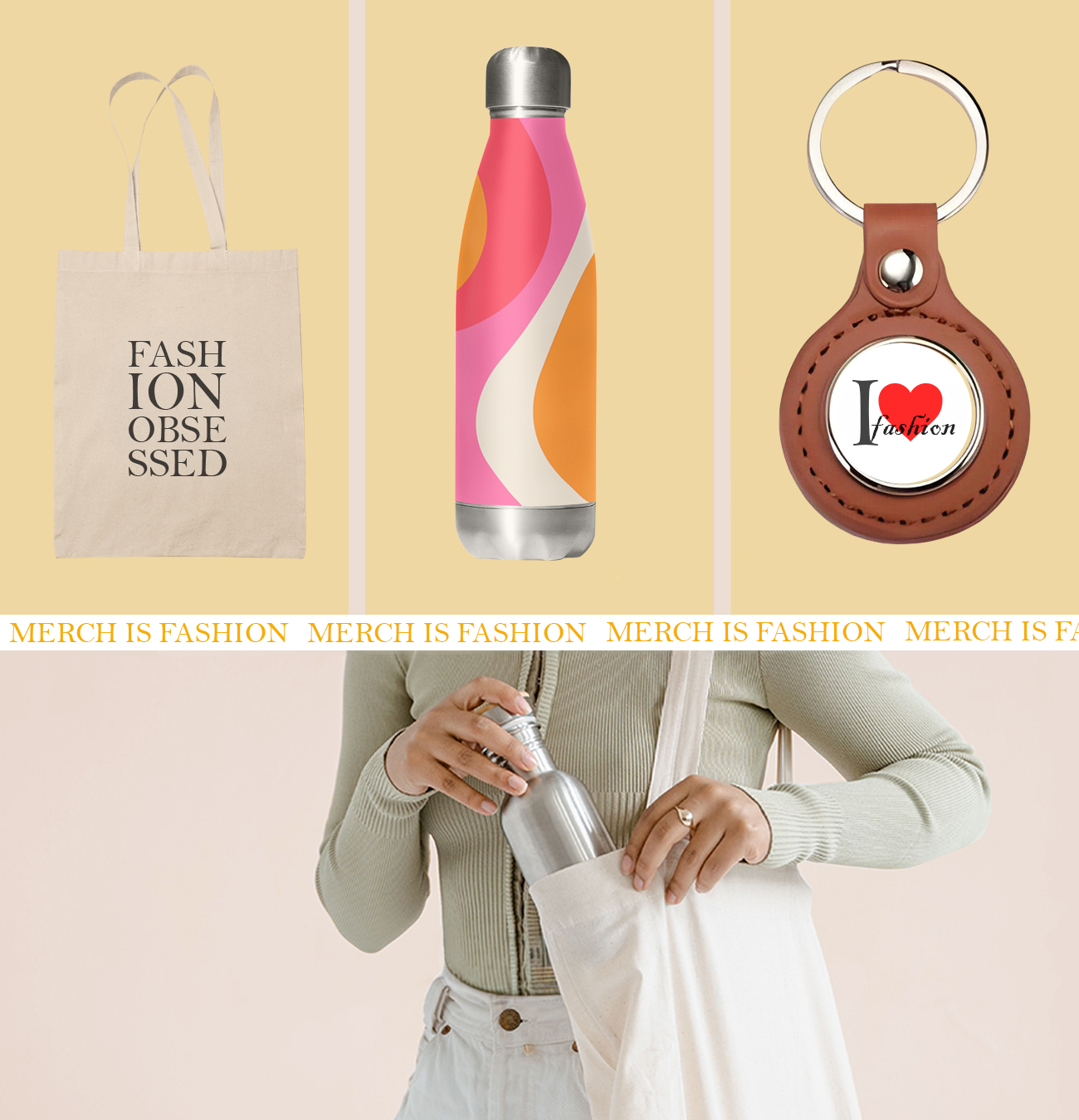
• Tote bags in coffee shops.
• Oversized branded hoodies at the gym.
• Reusable water bottles covered in stickers.
• Pins and badges on jackets and backpacks.
• Caps with subtle embroidered logos.
• Event merch that people are still wearing years later.
The funny thing is, most people don’t even think of these items as merchandise anymore.
They’re just… part of their lifestyle.
And this trend isn’t slowing down anytime soon. General merchandise sales have been steadily increasing year-on-year since January 2024, with sales rising by around 7.8% in February 2026 alone. It’s a clear sign that people are continuing to spend on products that fit naturally into their everyday lives.
We’ve watched this happen across all sorts of industries. Music merch evolved from basic tour T-shirts into highly sought-after fashion pieces. Coffee brands, fitness communities, and lifestyle businesses have all discovered that great merchandise can create a genuine sense of identity and belonging that extends far beyond the original brand experience.
So How Does Branded Merchandise Become Fashion?
The secret is surprisingly simple.
The best merch doesn’t feel like merch.
The brands getting it right aren’t creating products people feel obliged to wear. They’re creating products people would happily buy even if there wasn’t a logo on them.
That means focusing on things like:
• Quality you can actually feel.
• Comfortable fabrics.
• Clean, wearable designs.
• Products that are genuinely useful.
• Branding that feels effortless rather than overly promotional.
• Colours people actually like.
• Packaging that feels considered and premium.
Because nobody really wants to look like a walking advertisement. They want something to feel good, look good and fit naturally into their lifestyle.
And let’s be honest, nobody has ever looked at a neon stress ball and thought:
“This really completes the outfit.”
Presentation Is Half the Experience
Branded merchandise is no longer just about the product itself. The presentation matters too.
In many cases, the packaging has become part of the experience.
A cotton tote, reusable pouch, or neatly packed welcome box instantly makes merchandise feel more premium. Add tissue paper, branded tags, or simply a thoughtful colour palette, and suddenly the whole experience feels intentional.
It becomes less:
“Here’s some stuff.”
And more:
“We actually thought about this.”
Why People Love Great Merchandise
At its best, branded merchandise creates a sense of belonging.
It’s a wearable way of showing affiliation with brands, events, and communities’ people genuinely enjoy being part of.
And there’s something fun about it too.
Great merch sparks conversations naturally:
• “Where’s that hoodie from?”
• “That tote bag’s actually really nice.”
• “Wait… your company gave those out?”
That reaction is marketing gold because it feels authentic rather than forced.
Unlike digital ads that disappear from memory within seconds, well-designed merchandise sticks around.
Sometimes for years.
What Businesses Should Take from All This
This shift presents a huge opportunity for brands.
People are increasingly tired of disposable freebies that end up abandoned on chairs after events. They want products that feel useful, stylish, and worth keeping.
The best branded merchandise now works more like fashion:
• It reflects brand personality.
• It creates emotional connection.
• It feels part of a lifestyle.
• It encourages social sharing.
• It keeps brands visible naturally.
A well-thought-out merch bundle can build excitement before an event, create lasting impressions afterwards, and keep your brand present in everyday life.
The Future of Branded Merchandise
The best branded merchandise no longer feels like marketing.
It feels like something people genuinely want to wear, use, and keep around.
When brands focus on quality, presentation, and thoughtful design, merchandise stops being an afterthought and becomes something people actively choose to incorporate into their daily lives.
Have a question or want to work with us?
Contact Us